Destination Insights
The seven Karavali Malenadu districts form one of Karnataka’s most varied visitor regions, from long Arabian Sea coastlines to coffee hills, temple architecture, forest-fed rivers and living food traditions.
Understanding the region as a connected journey does not diminish district identity. It gives each district more context and gives visitors better reasons to stay longer, travel more thoughtfully and discover places beyond a headline landmark.
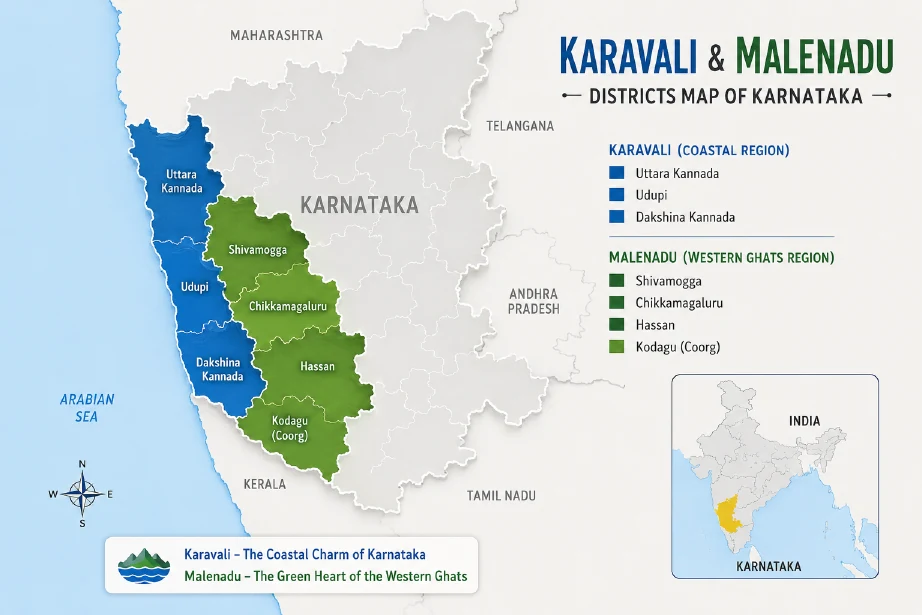
Three coastal districts, four Western Ghats districts
Dakshina Kannada, Udupi and Uttara Kannada form the Karavali group in KMTA’s regional map. Each has a distinct coastal character. Dakshina Kannada offers Mangaluru’s urban gateway, cuisine and sacred places. Udupi combines temple traditions, Malpe’s working waterfront, island views and an internationally recognised culinary name. Uttara Kannada stretches across a dramatic scale of beaches, sacred towns, rivers and forested interiors.
Shivamogga, Chikkamagaluru, Hassan and Kodagu form the Malenadu and Western Ghats group. Shivamogga is shaped by river systems, waterfalls and forest routes. Chikkamagaluru connects mountain terrain with coffee-growing landscapes. Hassan brings Hoysala heritage together with the green routes of Sakleshpur. Kodagu is known for coffee estates, river landscapes and a distinctive culture of hospitality.
Why connection changes the visitor experience
Administrative boundaries are essential for governance, but a visitor often plans by theme, time and route. A culinary journey may begin with coastal seafood and continue through coffee country. A heritage route may connect Jain, Hindu, Christian and Islamic places across several districts. A nature journey may follow river systems from the Ghats toward the sea.
When tourism stakeholders understand these relationships, they can make better referrals. A coastal hotel can confidently suggest a highland extension. A plantation stay can help a guest choose a realistic heritage stop. A transport provider can design routes around travel time and safety rather than a crowded checklist.
Connected itineraries also widen economic opportunity. Visitors who stay longer use more local services, and journeys that include smaller towns or locally hosted experiences can distribute spending more broadly.
The role of accurate district storytelling
Regional promotion works only when district information is credible. Landmark names, access, weather, opening arrangements, safety rules and cultural expectations can change or require context. Tourism communication should distinguish a verified fact from an attractive assumption.
KMTA’s district pages therefore emphasise representative destinations and responsible planning instead of rigid schedules. Visitors are encouraged to confirm current conditions with appropriate authorities, site managers and authorised operators. This is especially important for sea travel, waterfalls, forest routes, mountain viewpoints and sacred places.
Building routes that respect place
A connected tourism region should not encourage faster, more extractive travel. It should support slower and better-planned journeys. Trying to cover distant places in one day increases road pressure, reduces local spending and can tempt visitors to ignore closures or safety guidance.
Good itineraries leave time for meals, local guides, unplanned weather, respectful visits and simple rest. They use licensed services, keep groups appropriate to sensitive sites and recognise that plantations, harbours, farms and religious precincts are working or sacred environments.
Seven district entry points
Start with the Dakshina Kannada guide for Mangaluru and the southern coast; Udupi for coastal culture, cuisine and island-linked experiences; and Uttara Kannada for coast-to-forest scale.
Explore Shivamogga for river and waterfall landscapes, Chikkamagaluru for coffee hills and high peaks, Hassan for Hoysala heritage and Sakleshpur, and Kodagu for coffee, culture and Cauvery-linked journeys.
A shared regional invitation
KMTA will develop regional stories, maps and collaborative opportunities in phases. Stakeholders can help by contributing verified local insight, designing realistic journeys and representing their district with confidence.
Visit the district index or register membership interest to take part in the regional conversation.
How connected routes can create wider value
A connected region does not require every visitor to travel through all seven districts. It requires clear choices. A coastal holiday might add a highland stay; a heritage journey might include local cuisine and a guided landscape experience. When routes are explained with realistic travel times, visitors can build an itinerary that suits their interests instead of following an exhausting list of landmarks.
This approach can distribute opportunity. Drivers, guides, accommodation providers, restaurants and experience hosts in neighbouring districts can recommend one another when their information is current and their standards are clear. Joint familiarisation, shared maps and well-maintained referral contacts can make those connections easier without removing the individuality of any business.
The regional story should therefore be broad enough to inspire and specific enough to be useful. It can highlight the relationship between coast, rivers, forests, cultivated landscapes, towns and heritage while directing visitors to detailed district guidance. Connected promotion succeeds when it lengthens meaningful stays, improves visitor confidence and encourages spending with local enterprises across more than one place.
Reviewed: 23 August 2026.